
Xamun runs the real-estate backroom — the transaction, the escrow, the compliance — as systems you own.
Nine systems across two markets, each with a live demo you can open, and a compliance layer that keeps them current as the regulation changes.

What does Xamun run in real estate?
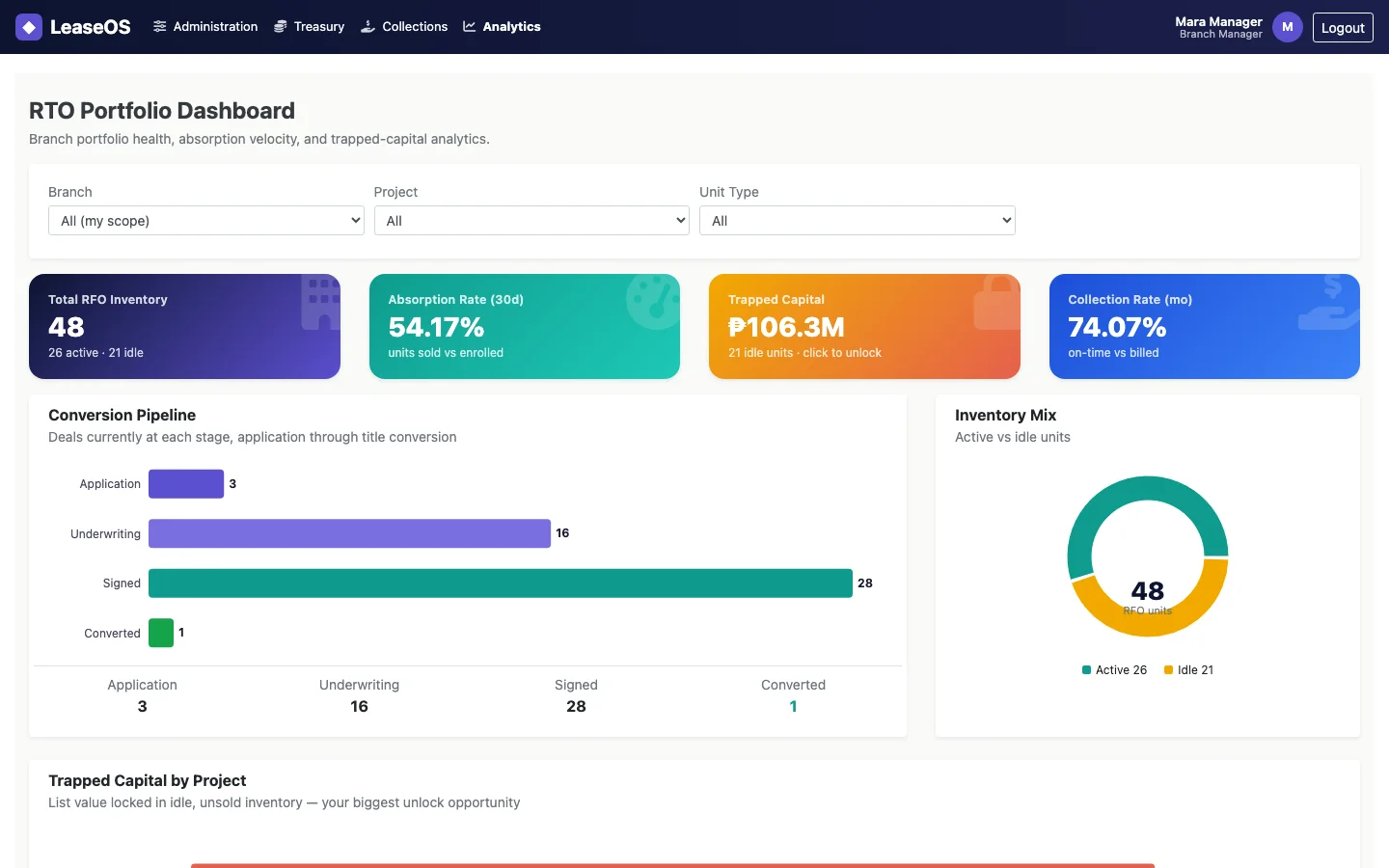
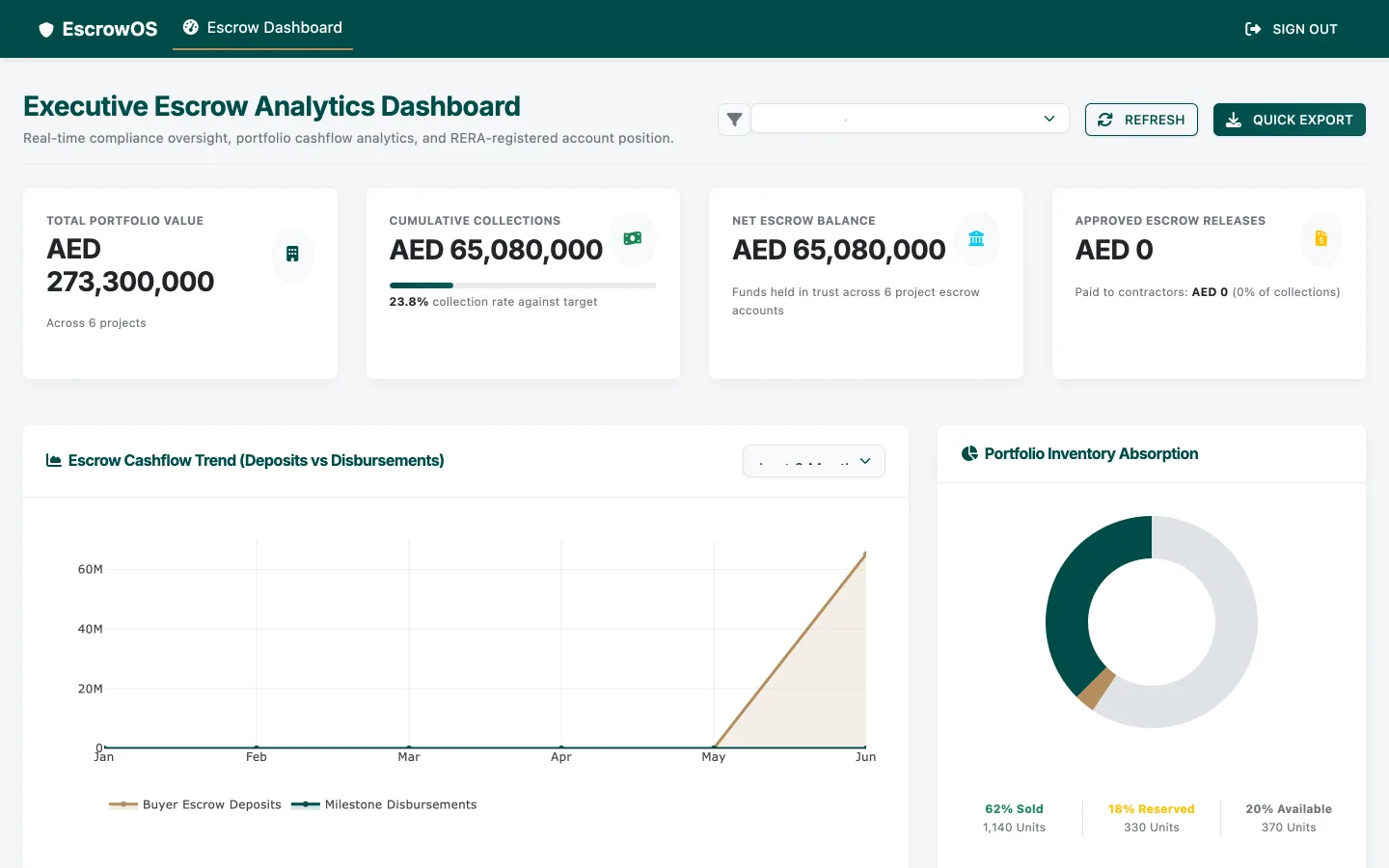
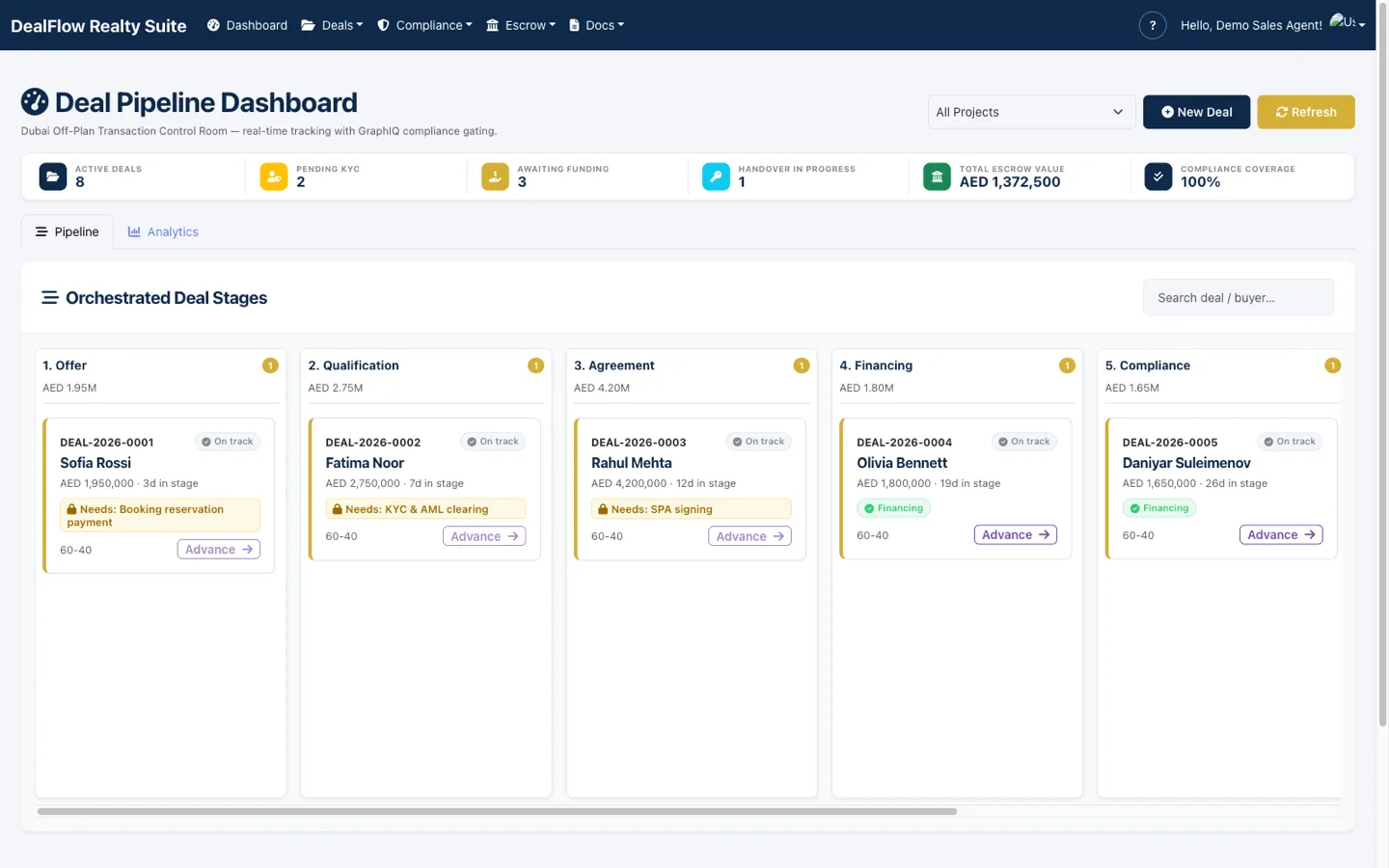
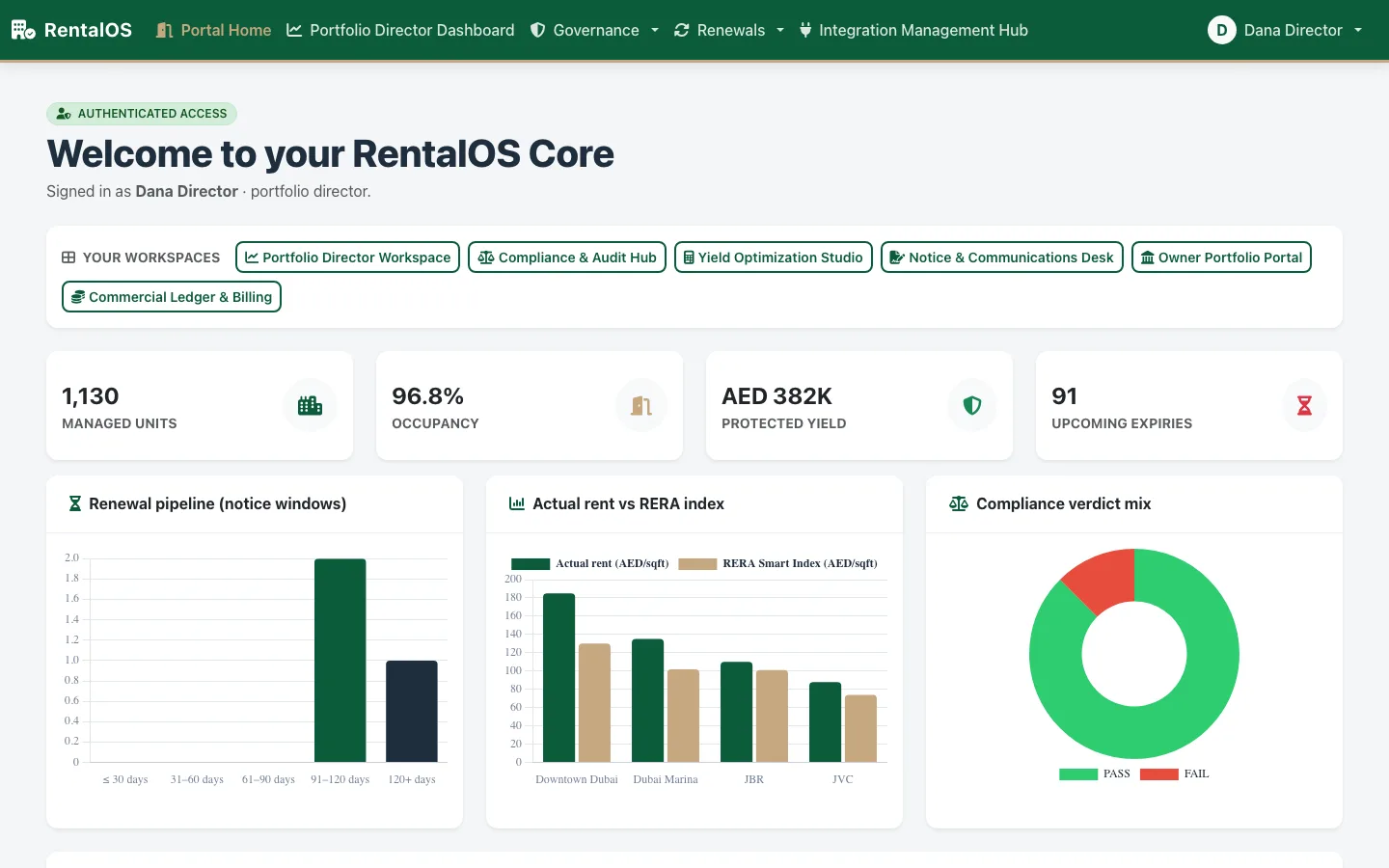
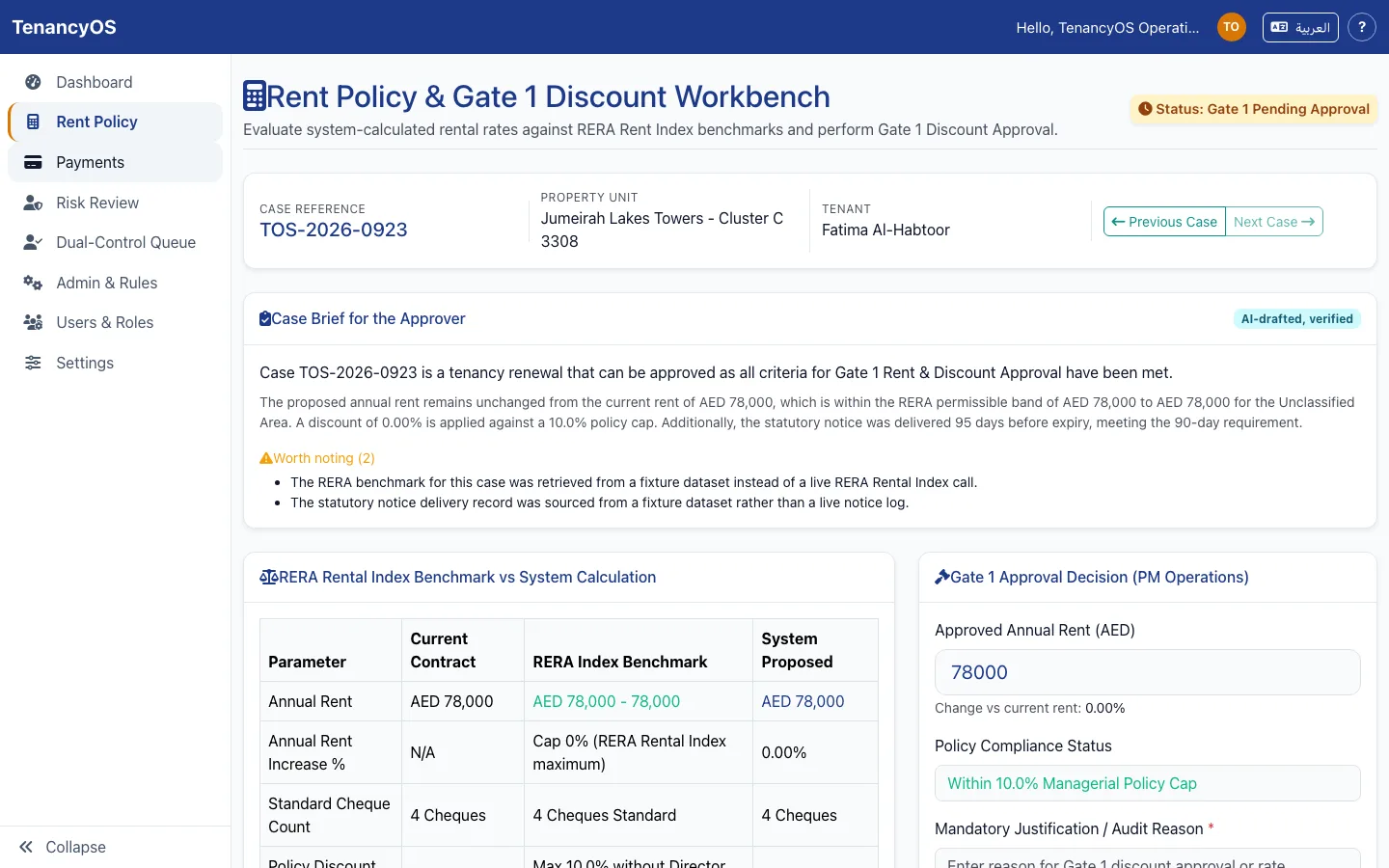
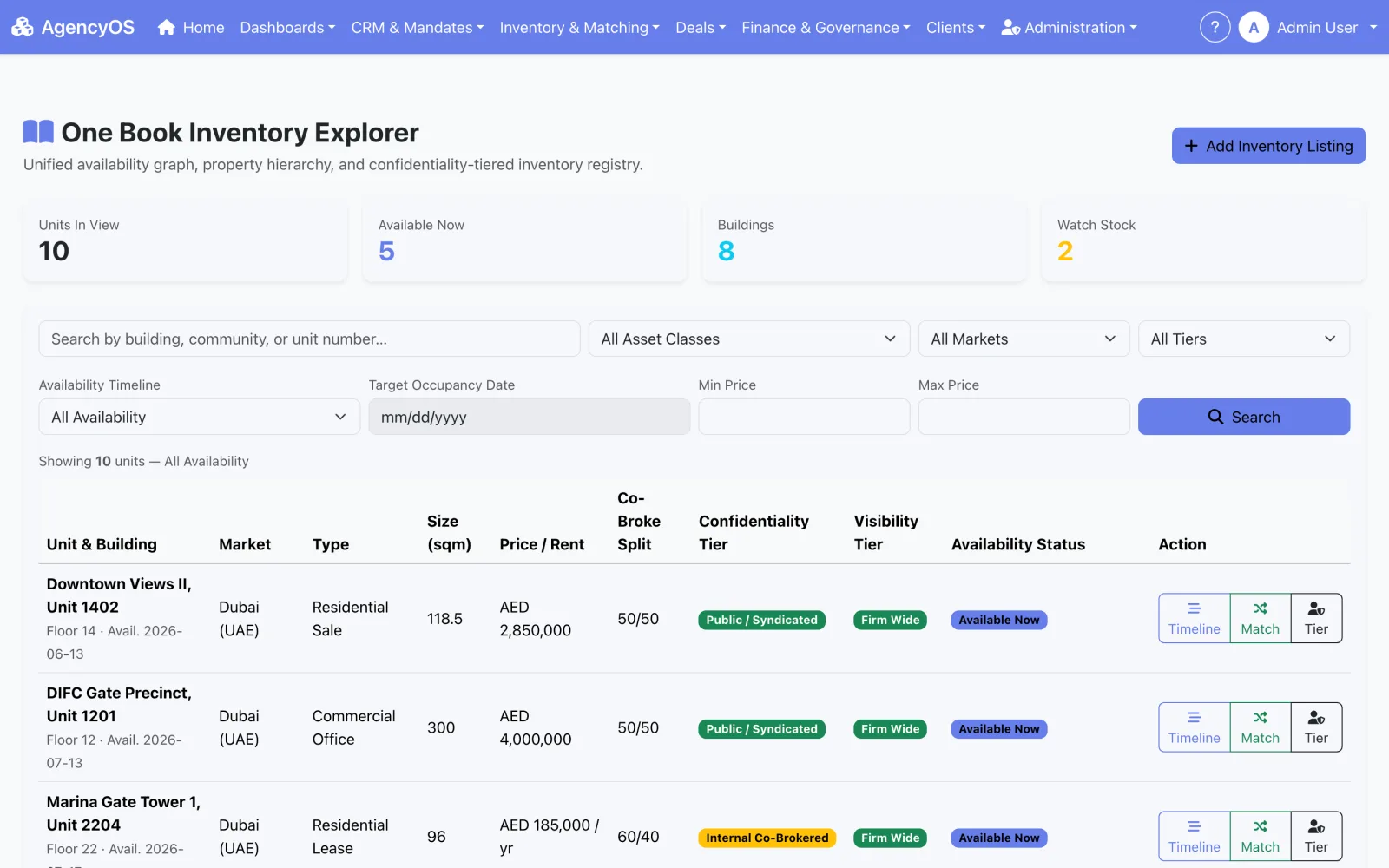
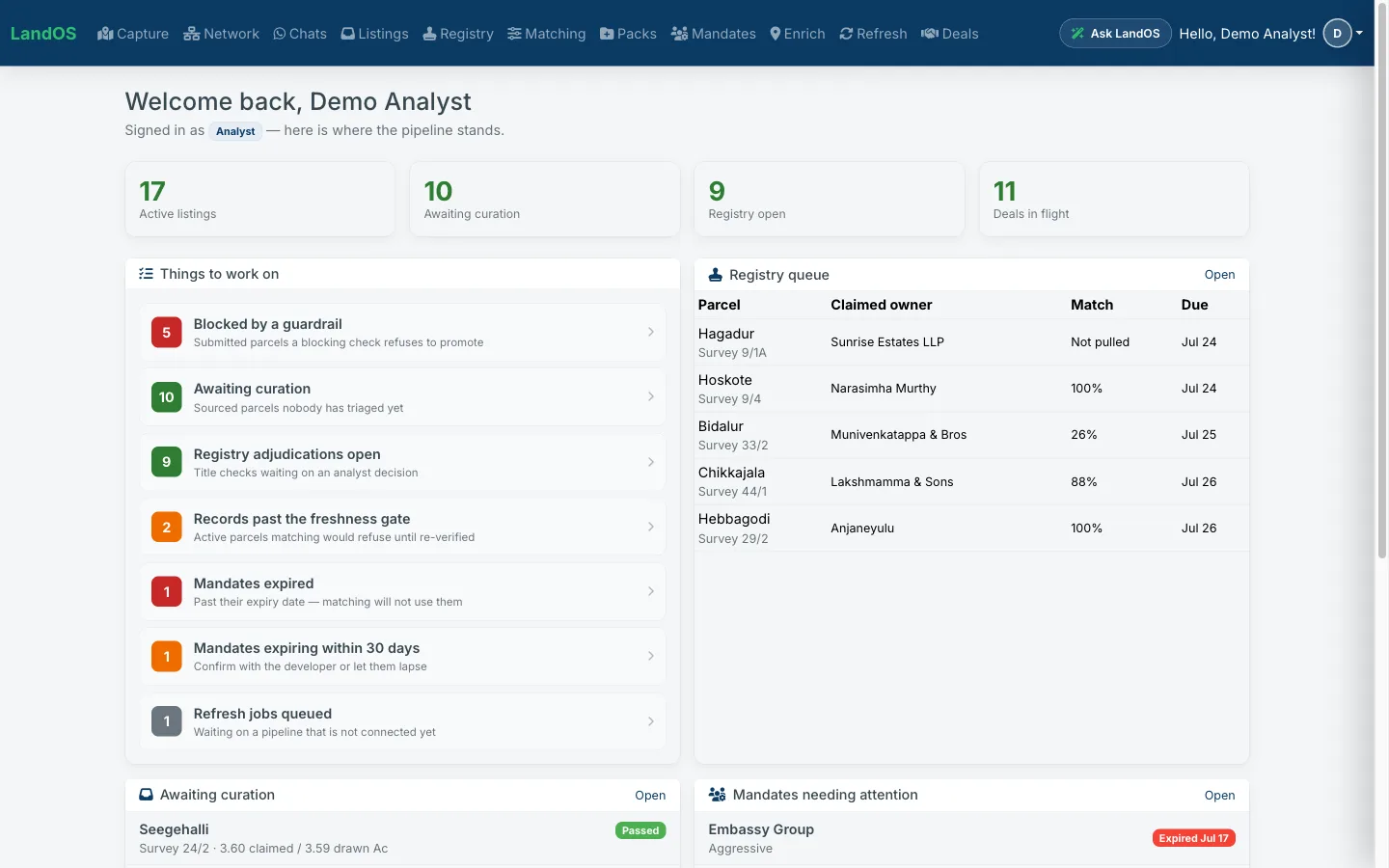
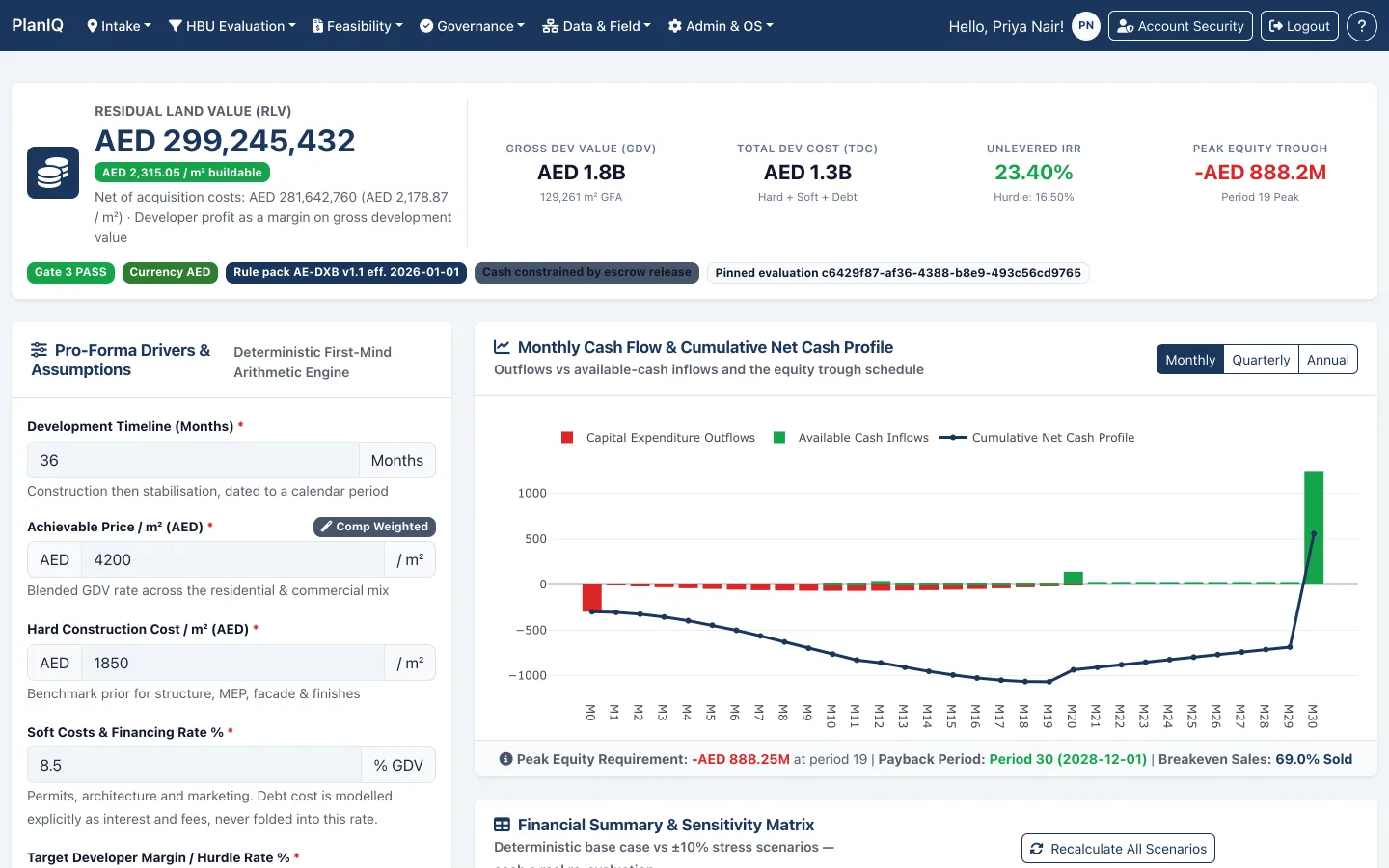
Nine systems built by the Software Factory, each with a live demo you can open. What you buy is your own separate instance — deployed on your infrastructure, under your brand, source-available and configured to your operation — with the GraphIQ compliance layer keeping it current as the rules change.
Has Xamun done this before?
Yes — years before the OS Series existed. Two of those engagements are summarised below, anonymised at the clients’ request. They are not the products above; they are why the products above look the way they do.
A sales portal where the lot inventory and the pipeline were the same system
Lot inventory and lead pipeline ran as one thread through to close. Lots were reserved, released or removed as each deal advanced, so availability reflected the true state of the pipeline rather than a spreadsheet someone updated later. Buyers served themselves — browsing available lots, opening the specifics of a particular plot, and requesting a booking or a viewing without going through a salesperson first.
It was built to convert overseas demand: buyers in California and Hong Kong, worked through agent networks on the ground in each market.
The same problem DealOS and AgencyOS now solve as a product — inventory that cannot drift from the deal state, and a transaction that stays yours however the lead arrived.
Inquiry to bank turnover, including the financing in between
End-to-end sales management across the whole life of a unit: inquiry, lead, sale, in-house financing, and turnover to the bank once the unit was handed over. The financing stage is the hard part — it is where a developer carries the receivable itself, and where most systems hand off to a spreadsheet.
While the unit was still being built, the buyer could follow construction progress directly rather than phoning for an update.
The same thread LeaseOS now runs as a product — a rent-credit ledger, in-house financing and a buyer transparency app, so the installment buyer can see their own position without asking for it.
xDD — Xamun Digital Delivery, the spec-first, AI-assisted methodology the systems above are built with — is published and peer-reviewed rather than asserted in a sales deck.
Your leads come from everywhere. Your transaction should stay yours.
Portals, brokers, aggregators, your own marketing — demand generation is a crowded, solved problem. The leak isn't at the top of the funnel. It's everything after the lead: the transaction, the escrow, the compliance, the renewals — the backroom where the money actually moves and the customer relationship is either kept or quietly handed to whoever's platform you're renting.
Xamun gives you the backroom as systems you own. However the lead arrives, the deal runs on your infrastructure, under your brand, with the buyer and the data staying with you — not an aggregator who takes the transaction, the margin, and the relationship as the price of the lead.
Own the transaction. Own the compliance. Own the customer — after demand gen is done, by anyone.
Portal, broker, your CRM, a walk-in — every source feeds the same system. We don't replace your demand channels; we run what happens next.
On an aggregator's platform, the transaction, the buyer data and the relationship are theirs. On yours, they stay yours — white-label, on your infrastructure, source-available.
Escrow, RERA, tenancy law, disclosures — enforced in the apps via GraphIQ, not left to checklists. The backroom that keeps you compliant is the backroom you own.
Where the backroom leaks
Real estate is asset-heavy, paperwork-heavy and rule-heavy — exactly the conditions where AI compounds. The mid-market operators who move first turn manual administration into a measurable advantage; the rest keep leaking margin to friction.
Renewals, escalations, rent collection and arrears live in spreadsheets and inboxes. Missed escalations and slow collections leak revenue that never shows up on a dashboard.
Tenancy law, building codes, disclosure rules and ESG obligations change constantly — and are tracked by hand. Getting it wrong is expensive; proving you got it right is harder.
Developers and builders manage buyer payments, milestones and disbursements across disconnected tools — with little real-time visibility into where money and progress actually stand.
Compliant by default — and kept that way
Regulated operations don't end at go-live. Every system we install for real estate draws on GraphIQ for the rules in force, and we operate and maintain it so compliance stays current as legislation moves.
Tenancy law, building codes, disclosure and ESG obligations are modelled in GraphIQ and enforced in the apps — not left to manual checklists.
As regulations change, we update the knowledge layer — and every installed app reflects the new rules without a re-implementation project.
You don't run the compliance layer alone. Keeping it accurate and the systems healthy is part of how Xamun owns the outcome with you.
We build it, run it with your team — and you pay per transaction processed.
No upfront CAPEX — we invest the build ourselves. Once it’s live, you pay a small toll per lease, sale or tenancy transaction the system processes: a small fraction of the value each one creates. A slow month means a small invoice; if it doesn’t run, you don’t pay.
Where completed transactions aren’t the honest measure, we price it as a fixed project instead; the accountability doesn’t change, only how you pay.
How is this different?
Per-unit SaaS prices the thing you already own. Your bill grows with your portfolio whether or not the software earned it, and the vendor keeps the product roadmap, the data model and the integration surface. You rent a shape someone else chose.
Xamun prices the transaction the system actually processes, and the system is yours — deployed on your infrastructure, white-label, source-available. A slow month is a small invoice. When the regulation changes, the compliance layer changes with it rather than waiting for a vendor release, and when your operation needs something the product does not do, the Software Factory builds it into your copy.
A systems integrator building on a general agent platform gives you an assistant that is fluent and non-deterministic. It will summarise a tenancy contract and it will also, occasionally, assert something it cannot support. In a regulated transaction that is not a rough edge — it is the liability.
TenancyOS is the clearest illustration of the alternative. It runs a two-minds design: one mind reads the instruments, a separate deterministic mind decides. Every gate cites the instrument it relied on, rules are version-stamped and effective-dated, refusals are cited rather than silent, and the system fails closed by default. The language model drafts and parses; it never decides. That is the difference between an agent that is usually right and a system that can prove why it did what it did.
Questions
What does Xamun actually run in real estate?
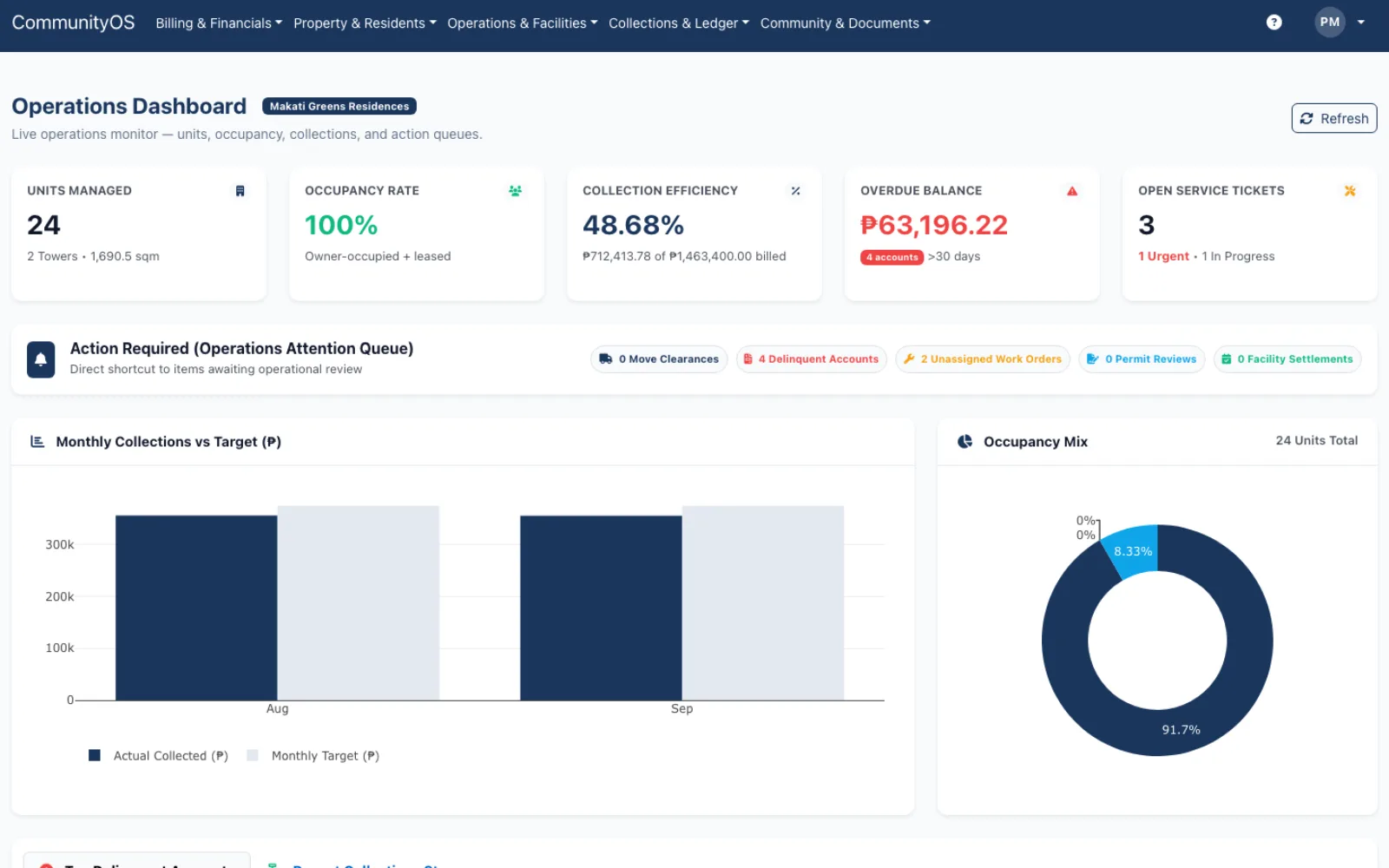
Xamun runs the backroom — the transaction, the escrow, the compliance and the renewals — as systems you own. Nine production products cover leasing and rent-to-own, off-plan sales, developer escrow, rental yield governance, tenancy operations, brokerage, land sourcing, feasibility underwriting and referral governance, with the GraphIQ compliance layer underneath them.
Does Xamun do lead generation or demand generation?
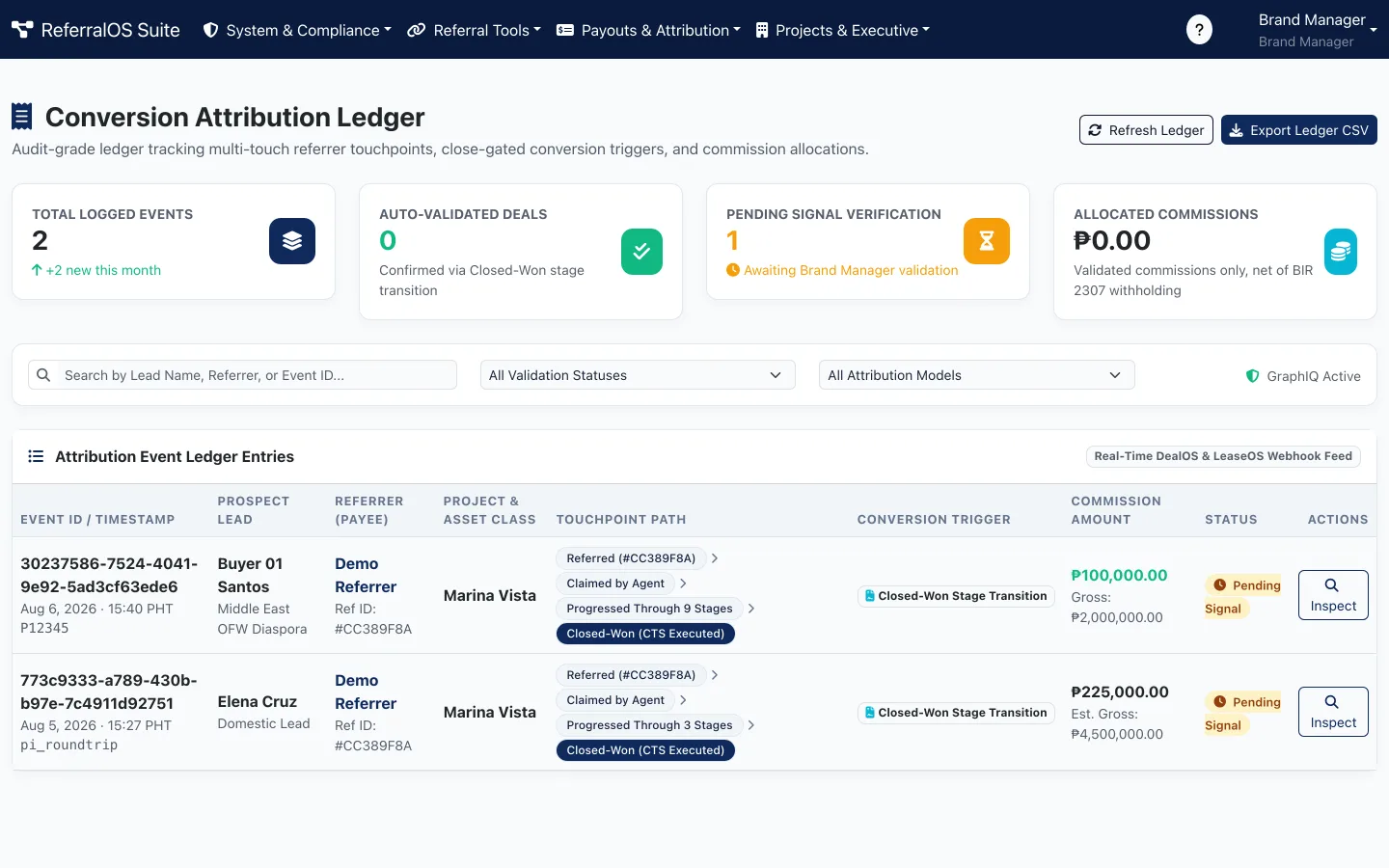
Xamun does not create demand — but it does govern it. Demand generation is a crowded, solved problem: portals, brokers, aggregators and your own marketing already do it. What is usually not solved is what happens to that demand once it exists, which is where ReferralOS sits. It manages referral demand across every channel with complete transparency — certified referrers, first-touch attribution that travels with the prospect, and an audit-grade ledger showing exactly which channel produced which closed deal. So the answer is precise: we do not generate the lead, we make where it came from a fact the system can prove, and we run everything that happens after it.
Which markets do these products serve?
The UAE and the Philippines, and the product list differs by market because the regulation does. UAE products are built to Dubai RERA, Decree 43, Ejari and escrow rules; Philippine products are built to DHSUD licensing, contract-to-sell and Maceda Law. The portfolio is the same idea with a different regulatory pack.
How much does it cost?
There is no upfront CAPEX. Xamun invests the build, and once the system is live you pay a small fee per lease, sale or tenancy transaction the system processes — a fraction of the value each one creates. A slow month means a small invoice; if it does not run, you do not pay.
Do we own the software?
Yes. The systems are deployed on your infrastructure, white-label and source-available. The transaction, the buyer data and the customer relationship stay with you rather than with an aggregator whose platform you are renting.
How does the compliance layer stay current?
GraphIQ models property regulation — tenancy law, building codes, escrow rules, disclosure and ESG obligations — as a queryable knowledge graph that the products consume through an API. When a rule changes, the graph changes and the products enforcing it change with it, as part of operations and maintenance, without re-implementation.
What happens when a product does not do what we need?
The Software Factory builds the difference into your copy. The ready-built products are a head start rather than a ceiling — whatever is not covered off the shelf gets specified and shipped in weeks, and the code is yours.
How is this different from a per-unit property management platform?
Per-unit SaaS charges for the portfolio you already own and keeps the roadmap and the data model. Xamun charges for the transaction the system processes and gives you the system. When regulation changes, your copy changes rather than waiting on a vendor release.
Is this an AI agent that could get a regulated decision wrong?
No. In products like TenancyOS the language model drafts and parses but never decides. A separate deterministic engine makes every regulated decision against version-stamped, effective-dated rules, cites the instrument it relied on, cites its refusals, and fails closed by default.
How long does it take to go live?
The ready-built products are production-grade on day one and are configured to your operation rather than built from zero. Where the Software Factory builds something bespoke around them, working software lands in weeks rather than quarters.
Can we start with one workflow rather than the whole portfolio?
Yes, and that is the usual shape. One binding constraint is unlocked first — a renewal book, an escrow process, a deal pipeline — measured against a business metric, with the result graduating into the wider operation once it holds.
Which market are you in?
Same portfolio, different regulatory pack. Each market page covers the regulation, the buyer profile and the products that actually apply there.
Decree 43 rent-cap bands, Ejari registration, RERA escrow, Mollak reconciliation and PDC handling — for institutional landlords, developers and GREs.
Real estate in the UAE →DHSUD licence to sell, contract-to-sell, Maceda Law installment-buyer rights, in-house financing and pre-selling — for smaller developers.
Real estate in the Philippines →Discuss your real estate challenge
Book a discovery call to see how Xamun combines intelligence, build, workflows and ready-built systems like LeaseOS, EscrowOS and DealOS — with compliance kept current — so the transaction, the buyer and the relationship stay yours. No upfront cost — you pay only when the system runs.