
The guest systems are solved. Xamun runs the back of house — the assets, the repairs, the shifts.
Six systems for hotels, resorts, serviced apartments, branded residences and their caterers, each with a live demo you can open. They sit beside your property management system and your facility management contract, and your teams can use them on the first day. Priced per property, the same unit you are paid on, or licensed outright.
Photo: Pexels
What does Xamun run in hospitality?
Six systems built by the Software Factory, each with a live demo. Two are new and built for hotels from the first line: AssetOS for what the hotel owns, PunchlistOS for what breaks. Four come from neighbouring industries and fit the hotel’s residences, rosters, kitchens and staff cafeterias.
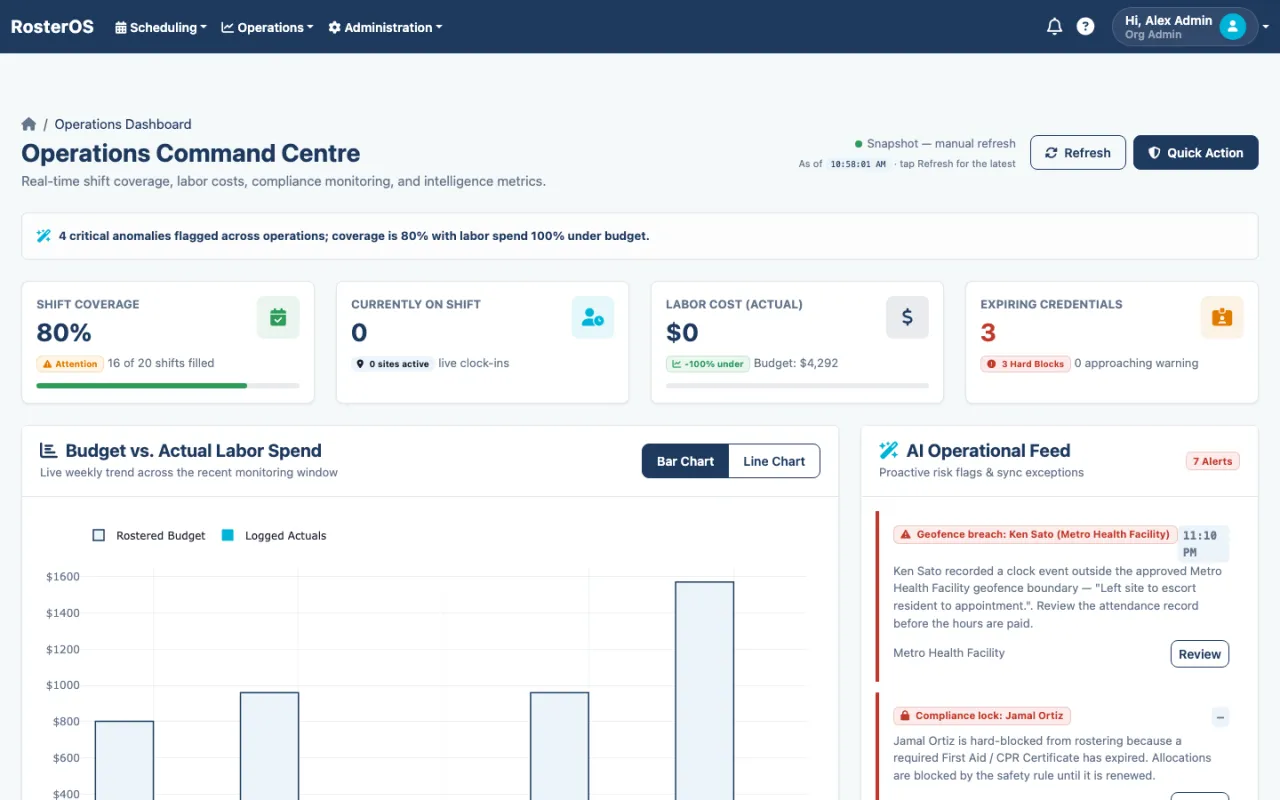
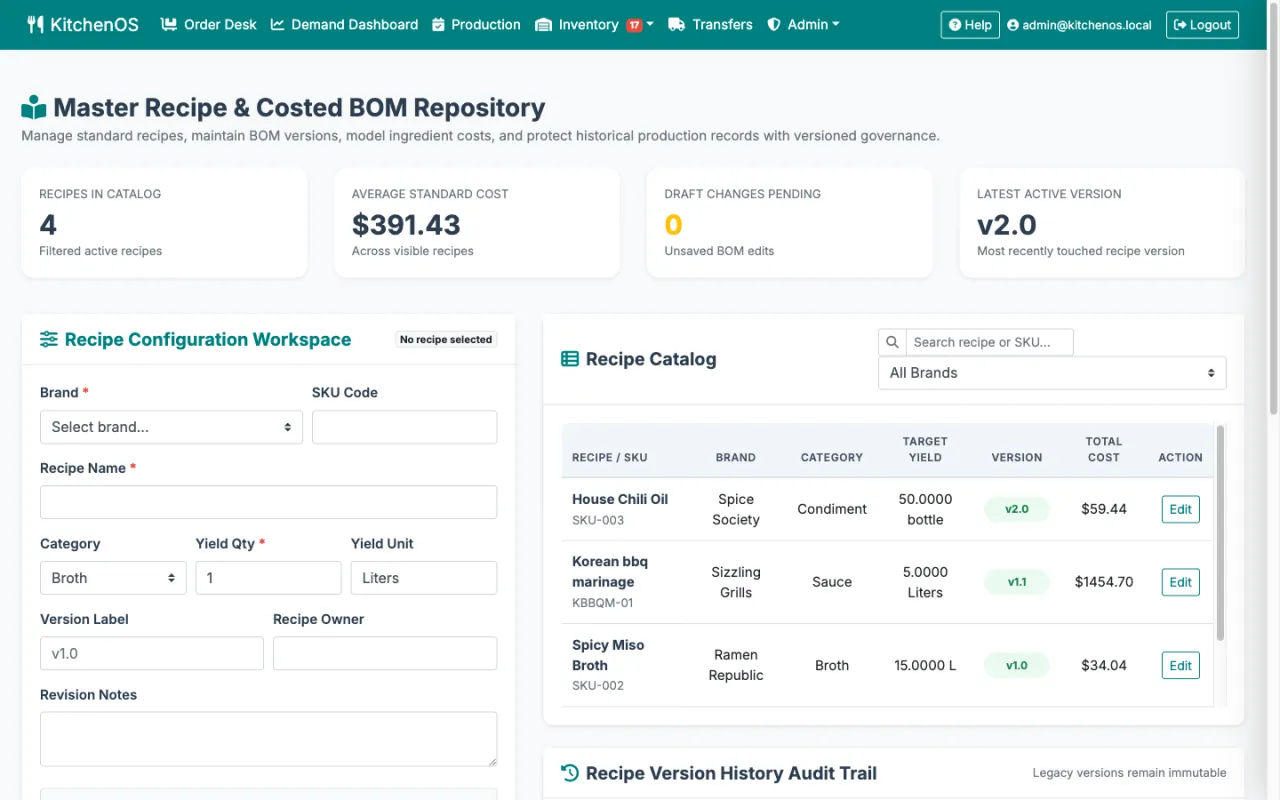
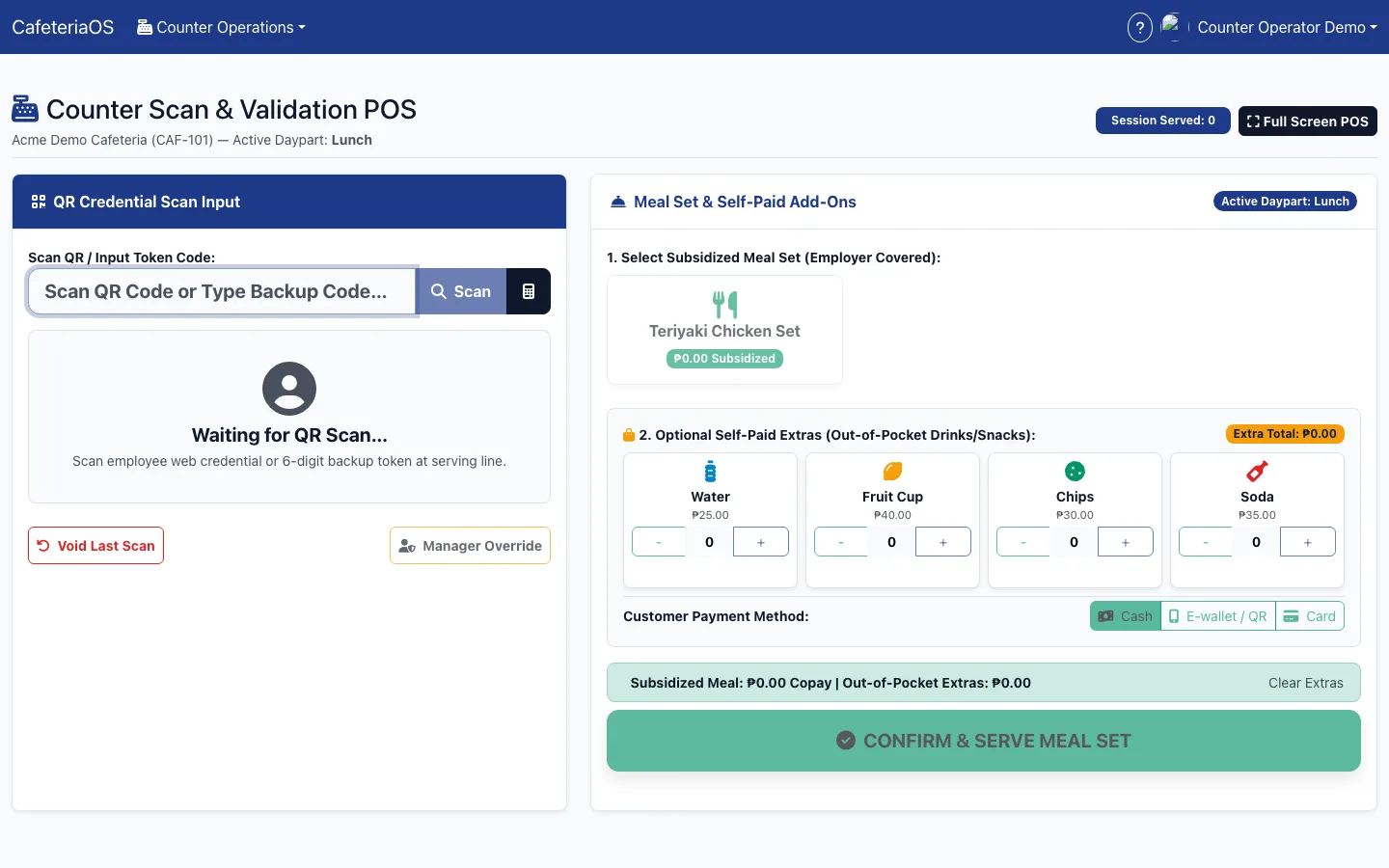
Hotels have a system for every guest. Few have one for what the guest sleeps in.
Reservations, guest messaging, housekeeping boards and facility management are crowded markets with mature products. What sits between them is the owner’s back of house: what the hotel owns and what it is worth, who fixes what and at what price, and whether the people on shift can use the system at all.
That is where money leaks quietly, and where an owner, an auditor or a buyer asks questions the hotel cannot answer from one place.
Your property management system runs the guest; your CAFM or FM contractor runs planned maintenance. Nothing here replaces them. It fills the owner’s side they leave thin.
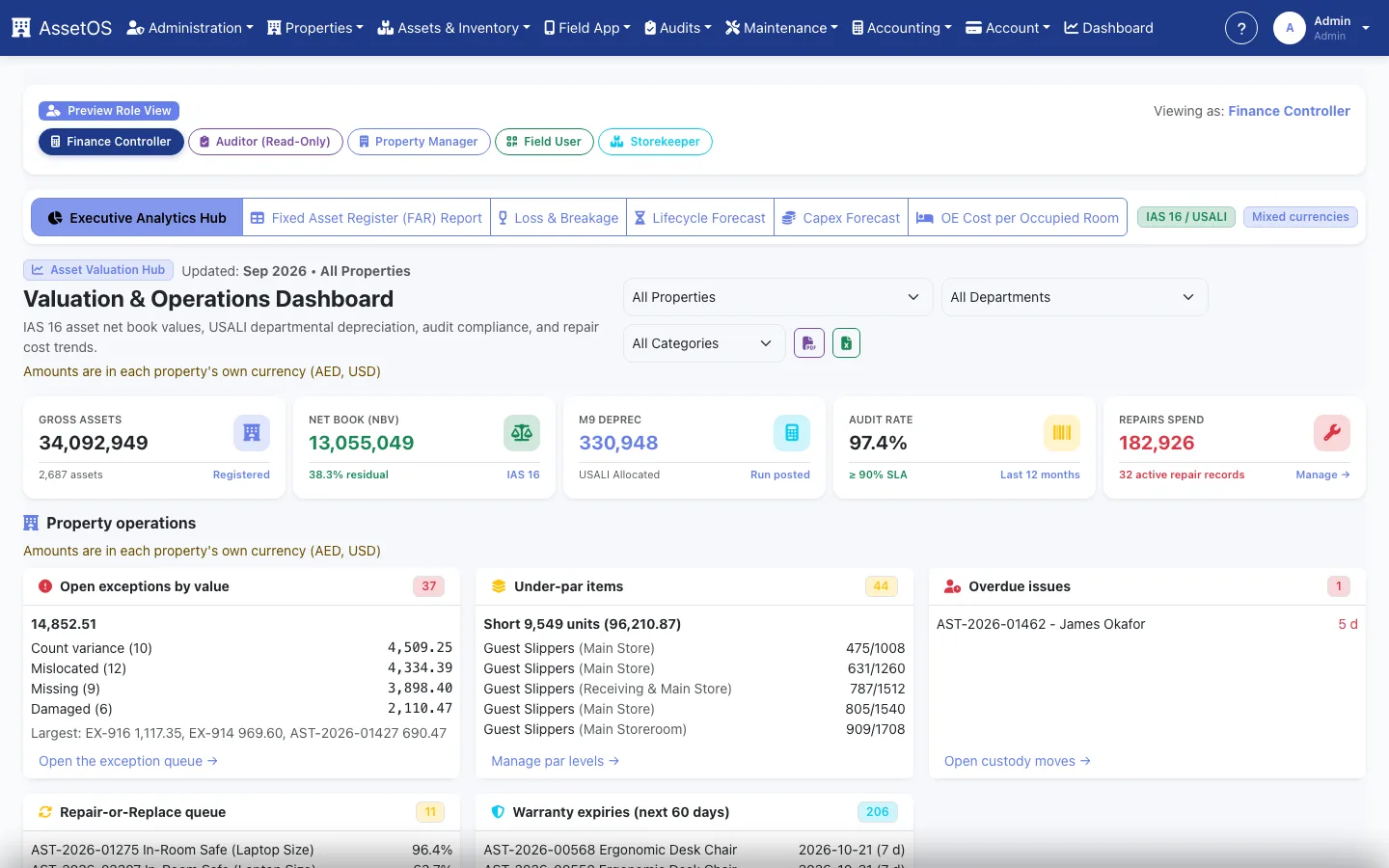
The physical truth (what is in the room, proved by a scan) and the finance truth (what it cost and what it is worth) come from the same event in AssetOS.
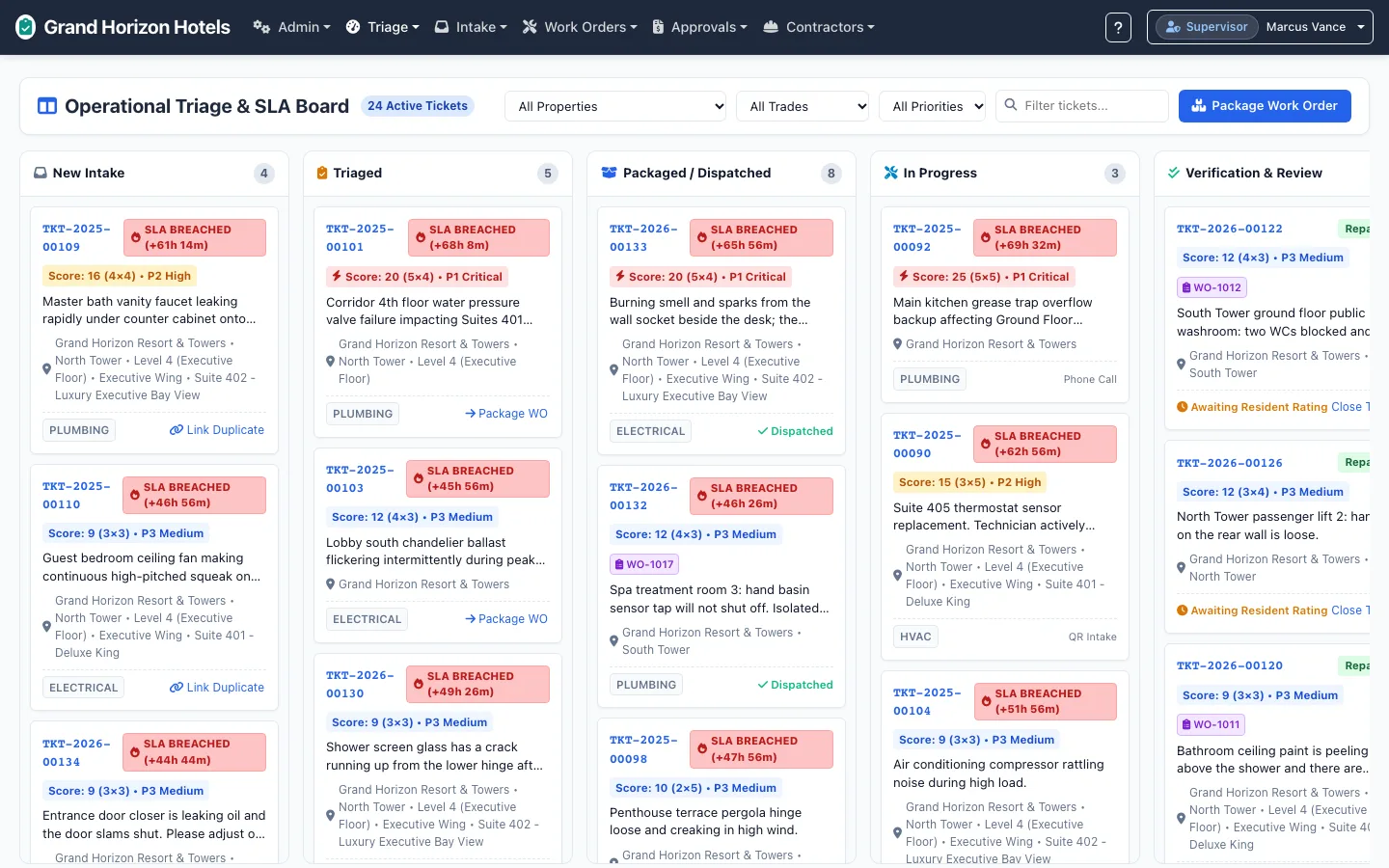
In PunchlistOS every repair has an accredited provider, an itemised quote, a named approver and after-photos, before it can close.
Where the back of house leaks
Engineering and housekeeping know where things are. Finance holds cost and depreciation in a module nobody walks. The two lists drift apart from the day the hotel opens, and the gap surfaces at audit or at a sale.
Most repair work goes to outside contractors. Who is approved for which trade, what the job should cost and whether it was done properly usually lives in email, WhatsApp and memory.
Linen, china, glassware and uniforms move between floors, laundries and outlets every day. Counted twice a year against a spreadsheet, the loss is found long after it happened.
Already run a CAFM or a facility management contract?
Keep it. Facility management covers planned maintenance and the technicians who do it. The table shows what each kind of hotel system does well, what it leaves to the owner, and where Xamun fits.
| What you may run today | Strong at | Leaves thin | Where Xamun fits |
|---|---|---|---|
| Guest-service and housekeeping platforms | Guest requests, room status, task boards | Asset register, book value and contractor pricing are secondary or missing | AssetOS takes repair costs from them; PunchlistOS covers defects where none exists |
| CAFM and facility management contracts | Planned maintenance, the FM technician workforce, MEP | Built around the contractor’s work, not the owner’s register, books or approvals | Keep them; AssetOS and PunchlistOS add the owner’s side |
| Fixed-asset modules in hotel accounting | Cost, depreciation, disposals | Nobody walks the register, so it is not proved physically | AssetOS proves the register by scan walks and par counts, then produces the journal |
| Generic asset trackers | Tagging, check-in and check-out, audits | Not shaped for hotels: no room kits, par levels or operating-equipment policy | AssetOS ships room kits, stamping and an editable operating-equipment policy |
The cheapest day to start an asset register is before the first guest.
The UAE alone had 103 hotel projects and 24,985 rooms in its construction pipeline in the second quarter of 2026, 13,828 of those rooms in Dubai (Lodging Econometrics). Each opening unpacks thousands of items in a short pre-opening window.
In AssetOS the pre-opening team defines a kit for each room type, stamps it across every room, and the first scan walk proves what actually arrived. The register exists from day one instead of being reconstructed at the first audit.
Has Xamun worked with hotels before?
Yes. The engagement below is anonymised at the client’s request. It is not one of the products above; it is where we learned how a hotel chain’s departments actually schedule people.
On-the-job training run across every property from one system
The chain managed trainee slots, batches, supervision and certificates by hand at each property. Xamun built one system for department shift capacity and training slots, batch booking with payment checks, daily attendance and assessments, and certificates issued from the platform.
A short design phase with training supervisors across the properties fixed the requirement in writing before the build began, which is why the system fitted how each property actually ran its programme.
Bought the way it suits your business.
You are paid per property you manage, so that is how we price the hotel systems; CafeteriaOS is priced on the unit caterers are paid on, agreed with them. Or own the system outright. Either way, start small.
Outcome-as-a-Service priced on the unit you are paid on. You earn per property you manage, so that is how Xamun charges. Not off-the-shelf SaaS: configured to how your hotels run, mapped to your outcome goals, hosted by Xamun and priced to replace the software you rent today.
Buy it outright: your own instance on your infrastructure, white-label and source-available, configured to how your hotels run.
Questions
What does Xamun run in hospitality?
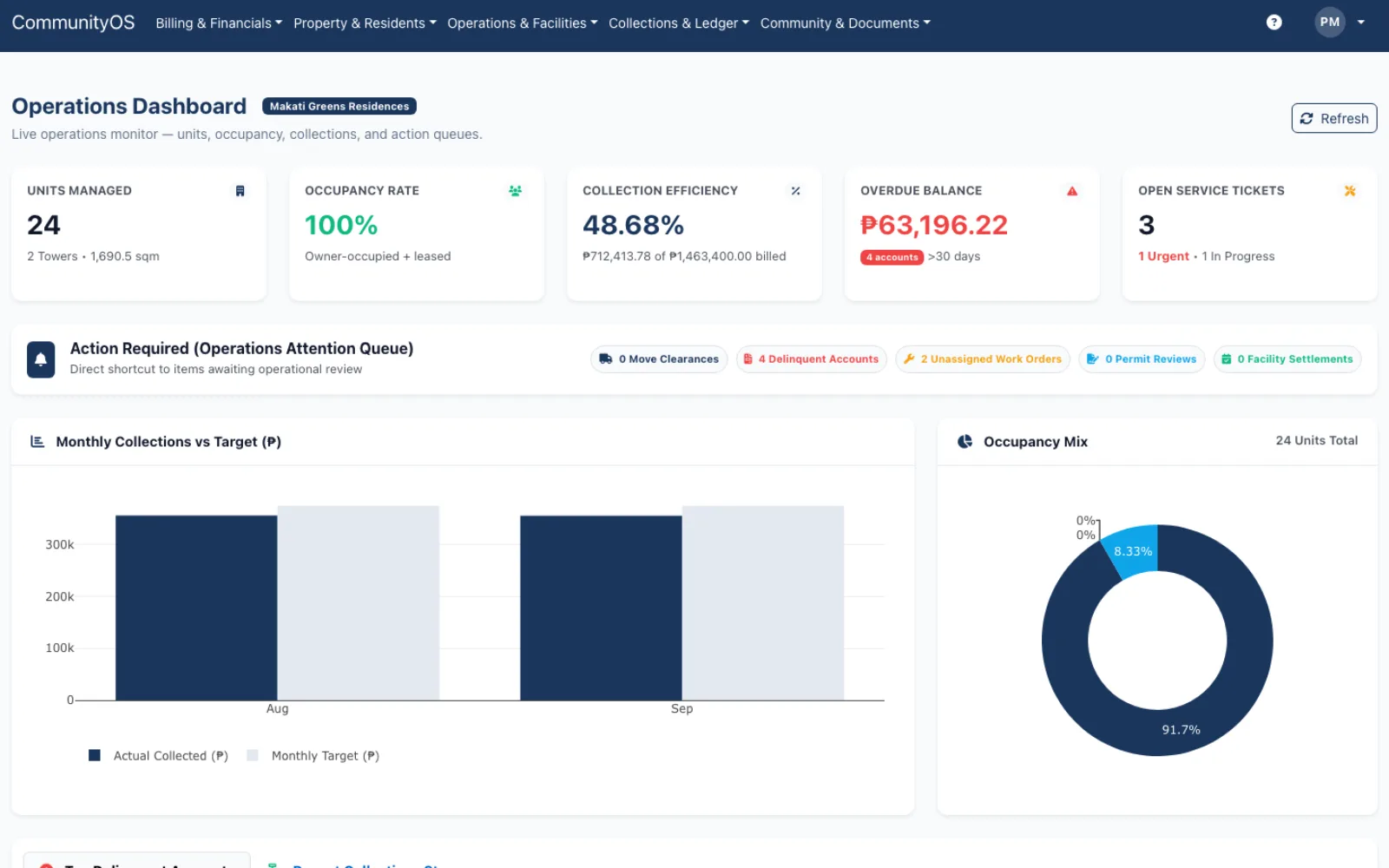
Xamun runs the back of house: the assets a hotel owns, the repairs on them, the people on shift and the kitchen that feeds the outlets. Six systems with live demos cover it: AssetOS (asset register, operating equipment and depreciation), PunchlistOS (defects fixed by accredited providers at an approved price), CommunityOS (residential owners’ associations), RosterOS (rosters, timesheets and payroll export), KitchenOS (central kitchens) and CafeteriaOS (corporate cafeterias run by caterers). They work beside the property management system and the facility management tools a hotel already runs.
Is this a CAFM or facility management system?
No, and it does not ask you to replace one. CAFM tools and FM contractors run planned maintenance and their own technicians well. What they leave thin is the owner’s side: a room-by-room asset register that matches the fixed-asset books (AssetOS), and control of third-party repair work, its price and its evidence (PunchlistOS). Keep your CAFM or FM contract; AssetOS can take repair costs from the maintenance system you already run.
Why don’t a hotel’s asset register and its books agree?
Because they are usually kept by different people in different systems. Engineering and housekeeping know where things physically are; finance holds cost and depreciation in an accounting module that nobody walks. AssetOS keeps one record for both: the scan that proves an item is in Room 1204 and the journal line that depreciates it come from the same event, so the two cannot drift apart.
How does Xamun handle linen, china and glassware?
As operating equipment counted against par, not as individual assets. AssetOS counts pooled stock at each linen room, pantry or outlet store against its par level, raises exceptions for shortages, damage and over-par, and applies the property’s own accounting policy for operating equipment, which finance can edit. Larger items such as televisions, furniture and kitchen equipment are tagged and tracked one by one.
Who approves a contractor’s price before the work starts?
Your supervisor, inside PunchlistOS. The provider posts an itemised quote against the work order (labour, parts and call-out, priced from the agreed rate card), the supervisor approves or rejects it before the work begins, and the ticket closes only after the supervisor has checked the completion photos. Every step is recorded, so the question “who agreed to this price” always has an answer.
Do our staff need training?
The design goal is no training at all. Hotel teams change often, so every field screen has one main action: scan, confirm, done. Guests and residents report a defect from a QR code with a photo and a line of text, without an account or an app download.
Does it replace our PMS or our guest-request tool?
No. The property management system runs the guest; these systems run the building and the back of house around it. AssetOS sits beside the maintenance or guest-service tool you already use through webhooks and CSV, and pairs natively with PunchlistOS where you have none.
Can we start before the hotel opens?
Yes, and that is the cheapest moment. In AssetOS a pre-opening team defines a kit for each room type and stamps it across every room, so the expected contents of the hotel exist before the first delivery is unpacked. The first scan walk then proves what actually arrived.
How do we buy it?
Per property, per month, or as a licence. Hotel management companies are paid per property they manage, so that is the unit Xamun charges on: each system is configured to how your hotels run, mapped to your outcome goals, hosted by Xamun and priced to replace the software you rent today. Or license it outright as your own instance, white-label and source-available. Either way you can start with one property.
Has Xamun worked with hotels before?
Yes. Xamun built an on-the-job training system for a Philippine hotel chain, covering department shift capacity, trainee batches, attendance and certificates across every property. The chain’s own training supervisors agreed the requirement in a design phase before the build began. That engagement is on the case studies page.
Discuss your back of house
Start with one property: a scan walk in AssetOS, or the next month of repairs through PunchlistOS. Book a call and we will open the demos with your team.